Sunday

Provincial delegate's report

My dear Carmelites,
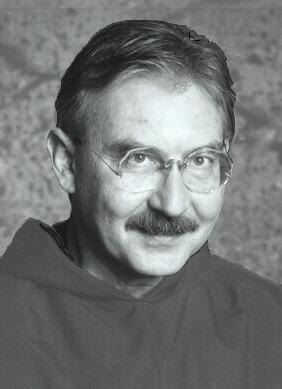
In October your provincial council will meet with Our Father General while he is here for visitation of our province. The General flies into New Orleans on Oct 7th to begin the visitation at our House of Studies where our two seminarians are studying for the priesthood. He will then visit our nuns in Covington, Lafayette, New Caney and San Antonio, before meeting our friars in San Antonio where he will dedicate the new chapel in our basilica’s basement on Oct 11. [photo of Fr. General with Fr. Provincial at dedication] After a trip to Oklahoma City, he will come to Dallas and meet with your provincial council on October 14, so keep us in your prayers on that fast day. We do have the privilege of celebrating the feast of Our Holy Mother St Teresa this year as it has the rank of a solemnity, which is the only rank that would take precedence over a Sunday liturgy. Our General, Fr. Luis Aróstegui Gamboa will conclude the visitation on Oct. 17th by gathering the friars at Marylake to begin our annual retreat which will be given this year by Fr. Juan DeBono ocd from Malta. [photo right]

Georgia
Dona Warren, formation director in Conyers since it’s inception as a canonical community, died on 04-Sep-06. Dona’s husband Jack has been keeping the commjunity informed of her heart condition for ther last two years. She was a wonderful asset to this community and a key member in its restoration. Obit in posting below.

Louisiana

On 06-Sep-06 I appointed Ethel Ganucheau [left] formation director for Covington to replace Lucille Brinz of New Orleans who has been formation director since this group moved across the lake. Lucille resigned the office to care for her husband. Ethel has served as president of Covington during their formative years. I also appointed Patty Still councillor in Covington to replace Lucille. Patty has been helping with formation work. We thank Lucille for the wonderful work she has done. On Sept. 16th, Councillor Suzette McGoey was unanimously elected as teacher for the aspirancy program.

Texas

visitation of Killeen, Provincial Councillor Gerald Alford allowed this Study Group to hold elections for new officers, the results of which would be subject to approval by the Provincial Council. On September 5th I appointed Julia Diaz president, former president Angel Acosta as Director of Formation, and Mariana Sanchez as councillor. The Group selected Yolanda Lopez treasurer, and Aida Acosta as secretary. Congratulations to all.

Visitation reports were sent to the councils of New Caney, Lubbock, Amarillo, and St Theresa’s in Houston. The Visitator shown here with president Margaret Nuñez, and formation director Georgina Torres of New Caney.

The Provincial Council in September reviewed eight members in McAllen for profession. I approved one for first Promise, and seven for Definitive Promise. Treasurer Jesús Campos reports he has ordered copies of the new legislation book with ritual from lulu.com and expects to receive them in time for the profession ceremony this fall.

I appointed Margarita Dufilho [left] director of formation for St Thérèse Group in Houston, and changed their status from a group in Discernment under the direction of New Caney to an OCDS group under the guidance of our Provincial Council. Chris Wood had previously been appointed as president of this group.

Alabama
Mobile, on the advice of the visitator, was given permission to hold an election of new officers subject to the approval of the provincial council. This is in preparation for the restoration of their canonical privileges.

Arkansas

Joan Heyburn died on June 16. Joan was born 27-May-1914, entered our order in Little Rock in 1956, and made her profession in 1959. She had been inactive for the last seven years, but well remembered as a long standing member. Her niece Joan Haupt is in bad health and requested no funeral Mass be said. Her ashes were put in the Holy Souls columbarium in Little Rock.


Your brother in Carmel,
Fr. John Michael Payne ocd, prov delg.

Labels: ,

Council Report

REPORT FROM THE PROVINCIAL COUNCIL
Oct 2006

Summer was a busy time of visitations.

Gerald visited our New Caney community and the St Therese Study Group which New Caney has been helping to get off the ground. From there, he joined his wife for some fun in Las Vegas. We were really hoping that he’d win enough money to take the full Provincial Council with them when they go to Rome in October, but alas, the “wages of sin” took their toll and the rest of us will have to just dream of Rome. Later in August, Gerald returned to Houston to visit our San Juan community. We note that Gerald’s visitation reports always include mention of the great meals he has during these various visitations.

Amelia was visiting Jackson MS and then Covington LA at the time of the writing of our last report. Both of these study groups seem to be making good progress towards canonical status.


Nancy made visitation of our Birmingham community to check on how well things went after we merged the Irondale study group into the Birmingham community.

Good news from Pascal ! At the end of June, he and his wife moved into their new home. Gradually he is rebuilding his life after the devastation of Katrina and the rest of the Provincial Council is eagerly looking forward to seeing him at our meeting in October so we can all finally give him great big hugs.

Somehow, Elizabeth has managed the summer without making any visitations. Se did have the joy of celebrating the feast of Our Lady of Mt Carmel with the Georgetown study group as they had several people make their First Promise and one person take her Definitive Promise.

In August, Elizabeth, Nancy and Amelia gathered in Chicago to go see the King Tut exhibit at the Field Musuem. They very much enjoyed the exhibit and could not resist having dinner at the Weber Grill for the feast of St Lawrence. The trip was pure pleasure (except for Elizabeth who was there also for her job) and they sure did have some fun.

We are now all turning our attention to firming up our plans for our annual meeting in Dallas on the weekend of Oct 12-17. We look forward to celebrating Teresa’s feast day with our Dallas OCDS. We’ll be spending that Saturday afternoon meeting with the Father General as he makes a visit of our province. Naturally, we’ll have a report on all this in the next Flos Carmeli. After Father General left, our president (left) invited us outside where [from left-right: she, Amelia, Anita & Pascal] blew bubbles on Mt Carmel Center's front porch. This was not an official council activity.

Provincial Council:
Pascal Alfano, Gerald Alford, Elizabeth Korves, Nancy Thompson, and Amelia Wilken

Labels: ,

Saturday

In Memoriam

Joan Heyburn, 92, DIED June 16, 2006, in Little Rock. Joan was born 27-May-14, was clothed in 1956, and professed on July 19, 1959, taking the devotional name Ann Joseph of the Infant Jesus. Joan taught dance at Our Lady of the Holy Souls School. She had been inactive since the late 1990's due to illness.

--submitted by Little Rock
Community of Blessed Anne of Bartholomew


Patricia Ann Jokerst, born 20-Apr-32, was clothed March 18, 1979 and professed on 26-Apr-81. Patricia made her Defintive Promise in 1984 in Lafayette. Pat was delighted to be a secular Carmelite and volunteered time as a portress for our nuns. Prior to finding Carmel she and her husband Charlie were devoted to the Enthronement of the Sacred Heart and the Immaculate Heart and she belonged to the Legion of Mary. They spent their lives working for God. Pat had two daughters and many Grandchildren. A wonderful woman to know and admire.

--submitted by Lafayette
Community of Mary, Mother of Grace


Dona Kaye Warren OCDS, went to her final reward on September 4, 2006, after an eight-month passion. She was a blessing to our Carmelite Community and was a true gentle woman of prayer. She had many gifts but didn't seem to realize how evident they were.

She was born in Kalamazoo, Michigan, on August 13, 1940. She was admitted into formation in Michigan but transferred to the Mary Queen of Carmel Community in Conyers, and was professed on July 10, 1991. Her Definitive Promise followed in 1994, and Vows in 1995.

Dona's humility was genuine and revealed itself in her honesty about her limitations. Her love for our Carmelite community was obvious to all by her perseverance in attending monthly meetings at the Monastery of Our Lady of the Holy Spirit in Conyers, despite a traveling distance of 143.67 miles each way!

In 2002, Dona accepted the position of Formation Director. She asked for and accepted suggestions with humility. Her dedication was evidenced by her compilation of our Carmelite Formation Program into three volumes, which were beautifully bound. She covered the expenses of this project herself.

Dona and her husband, Jack, and their two children, Jack and Fran, opened their home to troubled foster children. The experience left Dona with a wise understanding of human nature and our frailties. Her kindness and charity were exemplary. She was wise in discerning vocations and always charitable in understanding others.

We love Dona. She never forced her opinion on anyone and was always compatible. Everyone felt comfortable in her presence because of her marvelous wit and refreshing outlook on life. Her inner peace and joy were obvious. We will miss her terribly; however, our faith tells us her sufferings will bring many blessings. What a gift it was to know her!


--submitted by Conyers GA
Community of Mary, Queen of Carmel


A Meditation from Dona


"Next to my bed I put the face of Jesus, so I go to sleep facing Him and wake to see His face again in the morning. His face comforts me, even though it is the crucified Lord, because it is the face of the one perfect love who gave His life so I might have a life of hope. Where there is hope, there is no despair, only love. Love for all that God allows, for His gifts and His admonishments as well. Never have I been so foolish as to be angry with God. However tried and tested I might have been, yet there have been times when I felt uncertain, abandoned, even doubted. It was during these times that I wept the most.

The sadness overwhelmed me so I could not imagine going on; what purpose could there be outside of being so loved. Jesus came to take away our fear of the finality of death; He promised us a heavenly paradise where there would be no more tears, sickness or pain. He gave us the hope of living with Him in heaven for all eternity, a life of joy and love.

Is that not something we all want? I do, but I want more, I want to be possessed by God, consumed into His most perfect and divine will. There are many these days predicting chastisements and sufferings yet to come, before the second coming of our Lord - every one of them having differing details. I don't ignore what I've heard, I just store them in my closet (memory) and rather than fret and seek them out, I prefer to grow closer to the One who will judge us. What's the use of all the revelations if we fail to fall into union with His will? What purpose would my entertaining a lot of "what ifs", when He has shown us the way? It will take a child-like trust and confidence and those of us who fail in this will be lost due to our own self will.


--Dona Warren, 15-Feb-04

Labels: ,

Community Dues

In some of our visitations this year, the issue of community dues has arisen for various reasons. We thought we’d publicly answer a few of the questions we’ve been asked.

What do my community dues go towards?
We’d like to remind everyone that the Constitutions, Art. 55 states that a financial report is to be provided to the community each year. We suggest that the easiest thing would be simply to provide everyone in the community with a copy of the financial report that is submitted to the province each year. This will keep everyone informed of how their dues have been spent.

Dues should go towards things such as:
· rent for your meeting room (even if you meet at the local Carmelite monastery or the local parish, you should be paying rent for the use of the room)
· provincial dues (annual provincial financial statement is in the spring Flos Carmeli)
· stipend for retreat master, rent of retreat facility, other community related retreat expenses; same for days of recollection
· stipend for conferences given to the community by non-community members
· purchasing scapulars for clothings
· community mail and copies
· visitation expenses
· some of our communities cover partial or full travel expenses for things like the councilor workshops or Congresses
· some communities offer retreat scholarships for those who can’t otherwise afford the annual community retreat
· various other expenses approved by the council and community

We do have one community in our province who develops an annual written budget which is shared with the full community and then the amount of dues are based upon that budget.

What if the financial report shows an expense I want to question?
It is appropriate for a member of the community to question what the community dues are going towards. The reason for the annual financial statement being provided to the community is to provide some accountability to the community for how the dues are being spent. The written report provides much more information that the monthly verbal treasurer’s report that is part of our business meeting. Unfortunately, the Provincial Council has recently come across a couple of our communities where funds where spent improperly and without approval from the local council or community. We very much want to think that we can trust our fellow community members but the reality is that money is one of those touchy things which are not always handled appropriately.
For this reason, it is crucially important that the community be fully informed on what is happening with the community dues. When the local council receives the written financial statement in March and September (see Statute XVIII.4), they should also be provided with the bank statement to compare that the amounts are matching. This simple step insures that the treasurer is accurately reporting the community’s financial situation.
The written financial statement and checking it against the bank statement can surely go far in assuring that community dues are being properly used.

How much should our dues be and what if I can’t afford it?
Most of our communities have dues of $10/month which can be paid monthly, quarterly, or in full once/year. Some communities pay provincial dues out of those regular dues and others collect the provincial dues separately. It does help if the council draws up a budget each year which is shared and discussed with the community and then the amount of dues can be set based on the expected budget.
The vast majority of our members can afford $10/month as part of their monthly budget. For the small number of people who live on very limited incomes, Statute XVIII.1 notes that the local council should handle this with discretion. In other words, the member should approach a member of the council to explain privately why they are unable to pay the dues. This gets shared with the council which informs the treasurer that this individual is excused from dues. Both the council and the treasurer should keep this information in confidentiality. Some of our members are better off financial and are encouraged to contribute extra to help towards those few members unable to afford the dues.

What kind of bank account should we have?
A basic checking account serves well for most communities. Many of our communities make sure the account is at a bank where there is no monthly charge. There should be at least two names on the account – the treasurer and usually the president. Never should only one name be on a community account. Also, the bank account for the community should always be a separate account. In other words, community dues should not be kept in someone’s personal account. The Province does [not] have a tax ID number which can be used when establishing a community account; be sure that OCDS is included in the account name.

Labels: ,

Friday

Discerment

Pre-discernment for Potential New Aspirants

By Susan Ortega OCDS
(Dallas OCDS community)


I have been asked to share the Dallas community’s method of receiving new aspirants, which we like to refer to as “pre-discernment.” This method was developed after several years of struggles and successes with the process, and with the input of many dedicated OCDS members. Pre-discernment is a beneficial process because discernment is stressed throughout an individual’s walk in formation. The earlier a candidate realizes the depth of the commitment required and that their “inner” call must be confirmed by the community, the clearer and more spiritually healthy the discernment.

We begin by having a chosen OCDS community member to be the contact person for all interested individuals. Currently our Dallas contact member is also the teacher/director of the aspirancy class. His/her initial contact with the potential aspirant includes the following topics:

· Explain 2-way call (aspirant “discerns” a call to community / community confirms this call)

· Explain basic daily “requirements” of OCDS members (to be learned and implemented over time); daily meditation, morning and evening prayer; daily mass (if possible), etc.


· Explain length of formation periods: 1 year aspirancy, 2 year formation before 1st promise, 3 year formation before final promise, on-going formation for Professed members (important to stress this; a lifetime commitment to community meetings.)

· Explain meeting dates and times, meeting format (classes, business meeting, vespers, etc.)

After this initial discussion, the contact member mails out a copy of the community brochure*, a copy of the pamphlet on the meaning of the brown scapular, and finally something for the potential aspirant to pray over and reflect on. A good suggestion for this reflection would be a copy of the “Handout for Potential Aspirants” from the Oklahoma OCDS homepage or section I from the Constitutions, “Our Identity, Values and Commitment.” The individual is asked to spend some time, (minimum of one week) in prayer and reflection over the material received, and if still interested, to CALL BACK the OCDS contact person. The contact member can then answer any questions and have additional discussion with the potential aspirant.

If the candidate wishes to continue after this “first” period of discernment, the introductory information form is sent to them, along with instructions to return the completed form to the aspirant teacher/director before the start date of the new aspirancy class. We have found that visiting did not help individuals answer any questions and was a distraction to the community, so new people only attend community meetings after they begin aspirancy.

*It is helpful to have a pamphlet or brochure that describes some of the basic information about your community, as well as the phone number and/or email address of the OCDS contact member. Our experience has been that when an individual first makes contact with a community, their excitement often “clouds” their ability to remember some of the information we have shared with them. A written copy thus helps to clarify those points.


Discerning a Vocation to Carmel:

The Council’s Role

By the Council of the St. Teresa of Jesus Community, Cedar Rapids, Iowa


One of the responsibilities of the council of the local community is “to admit candidates to formation, the Promises, and the Vows” (OCDS Constitutions, No. 47 a). The council recognizes that this responsibility entails collaborating with the candidate in discerning whether God is calling him or her to the vocation of the Secular Carmelite or to another vocation entirely.

The first discernment, of course, rests in the council’s decision even to invite someone to attend a meeting. In our community, two members of the council meet with an interested person two or three times to explain a little of what Carmel is but mostly to listen. They try to see whether that person is truly called to a life of prayer and study in community or perhaps is called to another expression of the Carmelite charism. Or maybe the inquirer needs to be encouraged in a whole other direction. At this point, the interviewers are concerned not only for the applicant’s well-being but also for that of the community: will this person be a distraction to the unity of the community even in the context of a few visits? Is he or she psychologically balanced? Does he or she have an agenda and the desire to impose it on the community?

Beyond that, the interviewers are listening for the articulation of a desire to grow in an intimate relationship with Christ and His Church, as well as an interest in the Carmelite saints and their teachings. (In the back of their minds, the interviewers are also wondering what this person might bring to Carmel.)

That first year, while the visitor begins initial formation and comes to meetings, he or she is discerning whether Carmel, as made visible by this community, is what he or she is being called to. At the same time, the council is deciding whether this person should be clothed. A readily apparent indicator is attendance at meetings. Is he or she showing up? Or do other involvements, however good, take precedence? Perhaps this person will not be able to make Carmel a priority.

Does the candidate have a burning desire to feed the poor, rather than to pray? Perhaps he or she has a call to the Franciscans. Is there a strong inclination to teach rather than pray? Maybe this person is a Dominican at heart.

Is this person teachable? How does he or she respond to correction? Is he or she growing in trust and willingness to be transparent with his or her formator? Is there docility to the teachings of the Church?

Does the candidate integrate himself or herself into the community? Is there willingness to spend time with the community? Does he or she try to monopolize discussions? Does he or she seem to have as a frame of reference the charisms of other orders or movements?

Finally, but very importantly, the council seeks to understand the attitude of the candidate’s family to this call. If there is resistance, the council may advise the candidate to delay clothing.

While discernment for clothing focuses on the candidate’s call to Carmel, discernment for First Promise focuses on the candidate’s living out of that call. By the time the candidate applies for the Promise, the council should be able to see that this person has grown in observance of the “6 Ms” mentioned by Father Deeney: Mental Prayer, Morning and Evening Prayer, Mass, Mary, Meetings and Mission. The council recognizes that we all struggle to integrate the 6 Ms perfectly but looks for the candidate’s determination and perseverance to make these elements part of his or her life.
It is hoped that an area of particular growth in the life of the candidate for the Promise has been in the area of commitment to the mission of the order. It has been said that someone might join with an eye to what the community can do for him or her; after living the life of Carmel, that person should have grown in a desire to give to the order and in a realization of the importance of sharing the order’s charism with the world.

Our council’s method for evaluating readiness for clothing and the Promise has been to ask the candidate to respond in writing to a series of questions about the candidate’s call to Carmel, practice of prayer, integration of Carmelite responsibilities into the candidate’s life and so on. The responses are distributed among councilors and are used as an aid in the admission decision. The only face-to-face interview is with the spiritual assistant of the community, who then offers his recommendation to the council.

We councilors have recently discovered, however, the merits of talking directly with the candidate about his or her call. When we realized that we needed further information from an applicant about her desire for the Promise, getting that information required some phone calls and another request for a written response. We realized that a face-to-face interview would have simplified the process.

Discerning a candidate’s readiness for clothing or the Promise is an awesome responsibility. Our council is grateful that the road to the Definitive Promise is long, with many opportunities for both the candidate and the council to evaluate whether this Secular life is what God is calling the candidate to. Ultimately, the council relies on prayer and the guidance of the Holy Spirit in accepting an applicant to continued formation. It is our responsibility to confirm an authentic call and invite the called person to Carmel.


Discernment Interviews
of our OCDS members

--by the New Caney Council

Discernment of an OCDS member pertains to the specific Carmelite studies of the members formation period. Council may agree upon a series of questions to which a forth coming member is evaluated. He must reflect and answer the questions truthfully and openly. Honesty is an important ingredient to the members progress in spiritual growth because it will lead him/her to self knowledge. Self Knowledge is the first step towards spiritual growth.

Questions for candidates:

· What does it mean to you to be an OCDS member?
· What did you learn in formation that touched your heart and was imbued in your spirit
· How well have you integrated that part in your state of life.
· How consistent and faithful are you in applying what you have learned in Carmel.
· Was it difficult attending your monthly meetings this past year?
· Is there anything that may hinder your monthly meeting?
· Do you want to be a part of Carmel community by following Jesus in Teresian Spirituality.

Questions for Professed:

· What have you learned these past two years in your formation and how has it effected your spiritual walk with Christ.
· What has changed or developed in your prayer life these last two years.
· How does your family feel about your monthly meetings and yearly retreats.
· What is the difference between being clothed and now being professed.
· Do you feel you ready to make your profession and why.
· When you become a member of Secular Order of Carmel how are you willing to follow the demands of allegiance with Christ.
· Why do you think that God is calling you to this decision?

Questions for Definitive Professed:

· How do you feel about making your definitive profession and what does it mean to you and your family?
· How has a OCDS experience effected you, your family and your spiritual life these last six(6) years?
· What has your monthly meetings meant to you and have you had difficulty attending faithfully?
· How has your spiritual life improved your personal life, business life (if needed), and your church community activities?


After each interview:

Our Council takes one month to ponder and reflect each members responses prayerfully after which council again meets and discerns their findings with each other. During this month of discernment we meet with the facilitator to receive a report on progress in studies and interaction within the formation class. The member’s communal interaction during the past formation period is also an integral aspect of their spiritual growth.


Margaret Y. Nunez (president); Georgina Torres (Mistress of Formation); Mary Velez (counsel #1); Mary Ann Carroll (counsel #2); Joseph Fourgere (counsel #3)


Other Discernment Tidbits

Annual Check-in with Candidates

It’s recommended that councils meet annually with each candidate for a brief check in on progress. Questions for these check-ins could be:

· How are things in general in relation to your prayer life?
· Are you able to regularly pray Morning and Evening prayer? Are there any problems you’re having with the Office?
· Are you able to regularly set aside 30 minutes each day for mental prayer? What obstacles are you encountering in trying to do that?
· When you do sit down for that 30 minutes of mental prayer, what does it look like? Try to describe how you pray during that time.

These few questions should help the council quickly discern if there are any issues with the progress of a candidate that need to be addressed sooner rather than later. For instance, if the candidate describes their 30 minutes of mental prayer in terms of doing a bunch of devotions, then the council and the formation team need to give some attention to working with that candidate on a better understanding of mental prayer. Doing a brief annual check-in will allow time for both the council and the candidate to be aware of and address any concerns prior to the major discernment points (clothing, promises) of the formation process.

Addressing Problems and Concerns with the Candidate

Always concerns should be addressed in the most charitable manner. If there are any problems or concerns that the council has regarding a candidate in formation, these should be addressed with the candidate sooner rather than later. The council should not wait until the discernment interview to bring up the concerns but should meet with the candidate earlier. The annual check-in might provide a good chance for such a discussion. In this way, the candidate has an opportunity to make any necessary changes.

Role of the Spiritual Assistant in Discernment

Article 44 of our Constitutions says: “The Council may consult (the Spiritual Assistant) about the suitability of the candidate to assume the responsibility of the vocation to the Secular Order.” We note that some of our communities do this by asking the Spiritual Assistant to interview the candidate. Whether or not the Spiritual Assistant does an interview and provides feedback to the Local Council, the Local Council must also do their own interview because it is the Local Council and not the Spiritual Assistant who has the responsibility for discernment of vocations. The Constitutions do not require the Spiritual Assistant to approve discernment decisions of the Local Council and he does not vote on the candidate.

The Spiritual Assistant is a good resource for any concerns that might arise regarding the candidate’s good standing with the Church especially in matters of marital status if the candidate has had a divorce. The Spiritual Assistant may also help the Council in talking through discernment concerns if they feel the need for some guidance in the midst of a discernment dilemma.

Both Letters and Interviews

It is important as part of the discernment process to ask the candidate for both something in writing and for an interview. Communities ask for different things in a discernment letter (an example can be found on the provincial website under the Best Practices in Formation area). Among our candidates are both introverts and extroverts. The introverts will finding writing things out to be more helpful and yet might find the interview a bit more difficult. Whereas the extroverts will find an interview much easier than having to write out their thoughts. By asking for both, the council is able to hit upon what will work best for the candidate. The letter should be submitted to the council prior to the interview so that the council has time to read and pray over it and if there are any concerns raised by the letter, they can be addressed during the interview.

Taking our Time on Discernments

Doing discernment well is extremely important. Discernment of a vocation is not a matter of “time in scapular” but of progress in our relationship with God as expressed through Carmel. Discernment should never be rushed (not even to meet a “feast day deadline”) but requires time in prayer by both the candidate and the council. The Statutes allow for extensions of each formation period when necessary. To quote Pascal Alfano, OCDS: “If you truly have a Carmelite vocation, you’re going to be a Carmelite for the rest of your life.”

Labels: ,