Responsible Leadership and Collaboration
in Light of the Constitutions
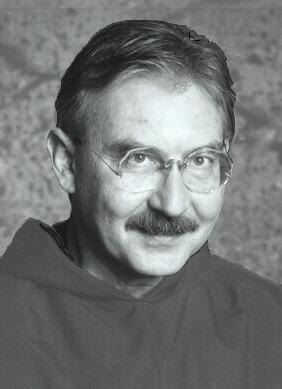
Father Aloysius Deeney, O.C.D., General Delegate
Transcript of address at the Western Regional Congress
June 17, 2007Good Morning, Carmelites!
You know in 1988, I came back from spending a year in Avila in Spain where I studied St. John of the Cross. I was invited to many places including here to Washington in 1989 and 1990. It was here in Seattle. I was invited all over the country: to monasteries of nuns and to secular order groups to talk about St. John of the Cross. It was really wonderful. I really very much enjoyed it. I was very welcomed every place, all the time. Now I am invited many places to speak, but I've almost stopped talking about spirituality, and I am always talking about organization. I've been invited to talk about organization here as well. But I am going to change it around and talk a little bit about spirituality. But the spirituality of organization!
The Rule of St. Albert, the Source of Living Streams, is a source that continues to give itself to us. And yes, somebody had mentioned yesterday that it is more than just a plan of life or formula of life or an organization. It's actually a source of inspiration for living the spiritual life. There is a fundamental presumption in the fact that these hermits asked St. Albert of Jerusalem for a formula of life. It was that these hermits, who were now together, did not know how to be alone without being together and needed something to guide their togetherness.
That also is the basic presumption that comes through the spirituality especially of our Holy Father to which I'm going to refer, the spirituality of St. John of the Cross, in that we do not know how to be alone before God or by ourselves. We need to come together in order to learn how to be alone before God. With that realization in our minds we can then look at: Why are we organizing ourselves to begin with? That will purify many things that come through in our organization.
Yesterday, thanks be to Father Pat McMahon's outline of the five points of the classical letter of the early middle ages, where there was the introduction -- the salutation and the exordium, and the application, and the petitio, and the conclusio.
I want to point out some things in [St. Albert's] Rule of Life that talk about governance. Because he says in the first part, "This is what I expect you to have." He says, The first thing I require, the first thing. You want to learn how to live alone? You want to learn how to be a hermit before God? You want to learn how to live deep spirituality? The first thing I require of you is —not to go to Mass every day. The first thing I require of you is —not to say the canonical hours or the 50 Our Fathers and 75 Our Fathers on feast days. The first thing I require of you is that —you have a prior. You have somebody in charge; one of yourselves, who is to be chosen for the office by common consent or that of the greater or more mature part of you. Second thing, each of the others must promise him —obedience, of which, once promised, he must try to make his deeds the true reflection. Then later on, in 1247 (and also chastity and renunciation of ownership), the basic idea was that we, as members, were to make our lives a reflection of cooperation and collaboration with the one who was in charge.
Now remember Father Pat said that there was first what was expected and then the application, because there is, later on, an application of how this collaboration and cooperation was to function. In No. 15 of the Rule of St. Albert: "On Sunday too or other days, if necessary, you should discuss matters of discipline and your spiritual welfare, and on this occasion, the indiscretions and failures of the brothers, if any be found, should be lovingly corrected."
So he not only says that you're to have a prior, but he says how the prior is to function. You discuss things. You are to meet on Sundays, then discuss the discipline of your lives, how are your lives going? There is the promise of obedience, which means you listen. That's what the word obedience means, that you listen, but it also means that you speak. In the way that this is described, you are to meet on Sundays to discuss how your is life going. Now we know that there are different systems, even in the church, there are different systems of governance. We have a hierarchical system, correct? It's the pope and the bishops, the parish priests and the parishioners. You might say there is the most basic line of how things function in the hurch, in the hierarchical system. This is not a hierarchical system, because the prior is someone who is elected from among the members or by the more mature members, the greater part of the community who elect the person who is supposed to be in charge.
Anyway, the person who was elected to be prior, his first purpose for being, was supposed to be that he could handle the business of the community (have his cell closest to the entrance gate of the compound where the hermits lived). But the actual decision of how the community was doing, the evaluation, was done through the community meeting, which was held every Sunday. So it was not something where the prior was understood to have the answers and it was up to the community of hermits to abide by the answers given by the prior. It was that the prior was to handle the business of the community. The others were to cooperate with him, and they cooperated with him by every Sunday discussing what was the nature of the community life: how was it going, what needed to be done, what was being done well. That, to me, that's the original way that the community on Mount Carmel was to function. The prior's biggest responsibility had to do with outside the community, because the evaluation that was done on Sundays by the community established how things were to be done.
In the Constitutions, No. 46, which is a section taken right out of the Rule of Life, just repeated word for word, I believe: "The council, composed of the president and the three councilors and the director of formation, constitutes the immediate authority of the community. The primary responsibility of the council is the formation and Christian and Carmelite maturing of the members of the community."
Now, if that's the primary responsibility, "...the formation and the Christian and Carmelite maturing of the members of the community," it also reflects what is the primary responsibility of the members, correct? The primary responsibility of the people who are in charge of the community (of those who have inherited the place of prior from the tradition of the Rule of St. Albert), if the primary responsibility for those people is to organize the formation of the community and to assist the members in maturing both as Christians and as Carmelites, then the primary responsibility of the members is participation in the program of formation and participation in the programs that help in maturing and identifying ourselves as Christians, as Carmelites.
So it's not just simply the structure or the spiritual inspiration that's given for being a member of the secular order or participation in the secular order. It's not just some system of governance. But it actually and very much is a way to participate and grow in the spiritual life. That's why we came here. We did not come here just to join one other organization. We came here moved by the desire to grow in the spiritual life. And that desire to grow in the spiritual life, we find we came here because we could not do it alone. You were sitting in your home, or you were sitting in a church one day, and you heard someone talk about Carmelites or Discalced Carmelites or third order and maybe you thought to yourself, I'd like to find out about that. But you got to a certain point where you said, I need that —I need what that is because I'm not doing it perfectly all alone. I am doing it so imperfectly [that] I feel like I am not doing it.
So I join the organization, but when we join the organization it's not just like joining a club. It demands our participation in it. Because the effects for which the organization exists will have no fruit unless I participate in it. Make sense? And so the purpose of the organization is to produce fruit in our spiritual lives. But in order to participate in it, there are some spiritual principles involved in the participation. The Rule of St. Albert laid down the requirement that there be someone responsible for the community. The other members of the community were to cooperate in obedience with that person. They were, however, to arrive at decisions about the community through the community meeting, through discussion. There is no presumption that the prior speaks for God. The presumption is that it is the community's discernment that determines what is the will of God and how we are living.
In the Constitutions, quoting exactly the Rule of Life, which I think reflects the nature of the secular order, see there are Nos. 46 and 47. The most important part of the requirement for leadership in the communities is No. 46. Forty-seven has to do with housekeeping, all those little things, among which is to dismiss a member. (Which has seemed to have gotten out of hand in some ways, or some places, where people are looking at dismissing members as something that they have some divine right to do.) What the divine obligation to do, for those who are responsible for the community, is formation and the Christian and the Carmelite maturing. Your collaboration, your cooperation as a member (our cooperation because this applies to us who are friars) [is to] cooperate and collaborate in obedience, so that we might grow in our vocation as Carmelites. It's not just to comply, or it's not just to keep the peace, or just to not ruffle any feathers. It's actually to cooperate in order to grow in the spiritual life.
Now I want to talk about a few things that St. John of the Cross says to us, about spiritual direction, because the spiritual purpose for which we became Carmelites is the overwhelming purpose. It's the only purpose that gives any sense to being a member of the secular order, to grow in the spiritual life. And in a sense since the leadership or the governance of the community is for the purpose of assisting people to grow in the spiritual life, St. John of the Cross has certain things that he says to us as members or directees and certain things that he says to us as leaders or directors.
And I want to take these things that St. John of the Cross is speaking about spiritual direction —and he's talking about receiving spiritual direction and he's talking about giving spiritual direction-- but I am applying it to membership in the community and leadership in the community. In the second book of The Ascent of Mt. Carmel, in Chapter 22, St. John of the Cross goes through a large reflection on the humanity of Christ, which we read in the Divine Office once in the liturgical calendar of the year, this section is read and another time on the feast of St. John of the Cross for us who are Carmelites. And it's where St. John of the Cross says, "God could respond as follows: 'I have already told you all things in My Word, My Son, and I have no other Word. Fasten your eyes on Him, look for Him, seek Him.'"
He applies this in the Incarnation of Christ, in the Word spoken by the Father; God has revealed everything. And he takes that Word spoken by the Father and applies it to spiritual direction. St. John of the Cross says in Article 9 of the 22nd chapter in the second book of The Ascent ofMt. Carmel. He says this, "What God said at that time did not have the authority or force to induce complete belief unless approved by priests and prophets."
Then this is the line, "God is so content that the rule and direction of man be through other men and that a person be governed by natural reason that He definitely does not want us to bestow entire credence upon His supernatural communications or be confirmed in their strength and security until they pass through this human channel of the mouth of a man." So he's saying in terms of spiritual direction, that God is so content, contento, God is happy. God is so happy that we be directed by men (by human beings). God is so happy that we be directed by human beings that He does not wish us to put trust or confidence entirely in what we think, in what we feel, in what we receive, unless it's confirmed. This gives us an attitude of, with regards to the spiritual life, the necessity for direction.
We have come here to Carmel, myself, yourselves, moved by the desire for God, so we know that we need the direction that comes to us from this organization that we have joined. It's not optional, and we have to approach this with the necessity of listening to what is said. We have a spiritual obligation —to cooperate. We cooperate with our confessor, when we confess to him. We cooperate with our spiritual director when we listen to what he has to say and are even willing to abandon what we think in order to trust. And we have a responsibility to cooperate, to work together, to collaborate (they all mean the same thing) with the one who is directing us in the leadership of the community. As members, we must have this disposition, to cooperate with the community, with those who are leading us. As often as God reveals something to a person, God confers a kind of inclination to manifest this to the appropriate person. Until a soul cooperates with the authority, he is restless. He's not restful.
No. 11 of the same chapter is about the soul cooperating with the spiritual director, and I am saying that this spirituality which comes from John of the Cross also informs us and forms us as members of a community. This is the trait of the humble person (a side point, how important is the virtue of humility in the writing of St. Teresa of Jesus. In The Way of Perfection, remember it's detachment, fraternal charity and humility: "And even though I mention this as last, it's more important than the other two because it includes the other two.")
So this is the trait of the humble person. The humble person is the person who is the member and the humble person is the person who is the leader. But this is the trait of the humble person; he does not dare deal with God independently. Nor can he be completely satisfied without human counsel and direction. God is desirous of this, for to declare and strengthen truth on the basis of natural reason, He draws near those who come together in an endeavor to know Him. There's the whole cement of community life. It is a cement, community life. We did not come here to live community life. We live community life in order to do what we came here to do.
You form community. You don't find it when you get there because when you get there the community is changing, and you're forming community, and your joining and the cement of this is to come together to know what is it that God is asking of us. What is it that God is asking of me? I join a community in order to learn it. And I am a member. Before I am ever a leader, I am a member of a community. No one, absolutely no one, in religious life has a vocation to be a leader. We have no hierarchy. Everyone has a vocation to be a member, and certain members are asked at certain times to take on the responsibility of leadership, but no one has the vocation to be president of the community. No one. Everyone has a vocation to be a member of a community. So we approach this membership as the most important part of our spiritual life.
The second half of paragraph 11 of the 22nd chapter of the second book of The Ascent of Mount Carmel: "Thus God announces that He does not want the soul to believe only by itself the communications it thinks are of divine origin, of for anyone to be assured or confirmed in them without the Church or her ministers. God will not bring clarification and confirmation of the truth to the heart of one who is alone. Such a person would remain weak and cold in regard to truth." Remember this is St. John of the Cross, our Holy Father, who is writing for us who come from a very eremitical tradition. But remember that the original hermits were not solitaries. They were living together and wanted to learn how to be alone. So this spirituality of membership, this spirituality of being a directee, the one who receives direction from someone else, this guides ourselves whether it's you or me or Sister [from Seattle Carmel] yesterday. As Carmelites we are members and that's what gives us our identity. And that's why we came here, to be a member with other members so that we can know God.
It's rather demanding what St. John of the Cross then said about being a spiritual directee. It's very demanding. We're not our own director, and that's what we really have to avoid. You can look in The Sayings of Light and Love what St. John of the Cross says about people who direct themselves, who listen to no one else but themselves. If you want to know what that looks like in the spiritual life, you can look in your own communities and see people who direct themselves as members of the community and how they do not build community. In the beginning then we say that they're a little bit different: "Well that person's a little bit different, you know." But then in the end we say "that person is a pain." But that pain came from that being a little bit different. And that little bit different came from not listening, not listening. Hearing but not listening. So that there's a demand that St. John places on people who are going to enter spiritual direction. And that demand is to listen. In your heart, to cooperate with the Holy Spirit, who speaks through direction and that God's very happy that we do things that way.
It also guides our way of being, of being members in the community. Remember when I said being members in community has never been, in the Carmelite tradition, being "yes men." Remember I said in the very beginning that the way things were done was by discussion. So yes, we cooperate, we listen, and we do that after we have spoken what we think, how we understand things, the way we see things. And having done and said and spoken what we think, we then listen and cooperate. So as members we have the obligation to speak our minds. And after having spoken our minds, we have the obligation to cooperate with what is decided. And that's the importance of the business meeting that's part of your community structure, is that you have the opportunity, not just to listen to what the council has decided, but that you actually have the opportunity (and it's the importance of the opportunity) to say what you think and when it's done, to cooperate.
Okay, now St. John of the Cross has some very interesting things to say to spiritual directors. And it's in the third stanza of The Living Flame of Love, from about Section 34 to 72, where St. John of the Cross talks to spiritual directors. St. John of the Cross says (here's the principle) a person goes to a spiritual director because the person wants to grow in the spiritual life. A person comes to the community of Carmel because they want to grow in the spiritual life. Now we've looked at, a little bit, how being a spiritual directee has its influence on being a member of the community. Spiritual directors have certain things that they must remember if they're going to be a spiritual director and remembering these, we're going to apply these principles to the role of leadership in the community whether it's for the friars or the nuns or the seculars. But it's the same spirituality that fills the role.
God alone is the agent. That's the principle that begins this discussion on spiritual direction. Now if God alone is the agent, then the spiritual director must be very humble before God, wanting to know not what I want to do, but what does God want. I can be very clear about what I want done, can't I? I can be very clear about what I want done. What does God want done? What is God doing with these people? St. John of the Cross says there is as much difference between what the soul does itself and what it receives from God as there is between human work and divine work, between the natural and the supernatural. In the one, God works supernaturally in the soul, and in the other the soul works only naturally. But the point here is that there is as much difference sometimes between what I want done and between what God wants done as there is between the natural and the supernatural.
"Let directors be content with disposing [these people that they are directing] for this according to evangelical perfection, which lies in nakedness and emptiness of sense and spirit... In this matter of striving for perfection, not to turn back is to go forward." (Living Flame, Stanza 3, Nos. 47, 48) If someone is not going backwards they are going forward. That's the presumption. You don't see them going forward; you see them going backwards.
About spiritual directors or about leaders or about presidents or about council members. Perhaps in their zeal these directors err with good will, because they do not know any better: "Not for this reason should they be excused for the counsels which they give rashly without first understanding the road and spirit a person may be following and for rudely meddling in something they do not understand instead of leaving the matter to One who does understand."
You are the president of a community and you have 22 members of the community and you have a council of four other persons (there is a council of five persons) so that leaves 17 other members. There could be 17 other ways of approaching God. There are 17 other ways because each person approaches God as an individual. If you have a very monolithic, one way of doing things, which is usually your way of doing things, then you're going to expect that everyone fits in that mold. And expecting that everyone fits in that mold, you're going to see people outside of that mold and you're going to say, "They do not belong." Whereas if you realize that you are in some way or another acting so as to introduce this person to God, who is leading this person in this way, then you're going to look and say, "Well, this person is moving at his or her pace and at his or her way." You're going to be open to understanding --what is God asking of this person, how is God asking this person to be a Carmelite?
All right, there are plenty of indications as to which one must be a Carmelite and things that one must do and there are indications as to people who have no vocation to Carmel:
• They have no interest in Carmelite spirituality
• They have a Marian spirituality that has nothing to do with contemplation or meditation or Our Lady of Mount Carmel
• Or they are not practicing members of the Catholic Church.
These are indications as to who does not have the vocation. But once all of us have entered into it, there are as many ways as there are persons. Even our Holy Mother St. Teresa in the fifth chapter of The Book of Foundations begins by saying: "There are many ways in this way of prayer and I'm going to write a few things about one of them." That thick! The few things she writes are about —that thick, about one of those ways!
There are so many ways to be a Carmelite. There are many ways not to be one and they are clear if we follow reading through the Constitutions or reading through the spirituality but there are also many ways [to be a Carmelite]. This is community life and not communism. We're not being forced to be a certain way in order to grow. As a matter of fact, if we force people to be a certain way, I guarantee you: they will not grow. So the spiritual director, therefore the leaders in community, have to be very aware that God leads souls along different paths. "Granted", says St. John of the Cross, "that you may possess the requisites for the full direction of some soul, for perhaps it does not have the talent to make progress. It is impossible [doesn't say it's difficult, he says]"it is impossible for you to have the qualities demanded for the guidance of all those you refuse to allow out of your hands. God leads each one along different paths so that hardly one spirit will be found like another in even half its method of procedure." [Living Flame of Love, third stanza, Chapter 59]
The greatest obligation, therefore, on those who have the responsibility of leadership is to respect the differences that exist in the members of the community. I believe that those who are given the responsibility of leadership in community are called to a deeper humility. Because it's a humility that almost can be crucifying. They elect you to come up with all the answers and you know you don't have them. They elect you to decide things and you don't know what to do. It is a deeper humility that's required and the humility demands a deeper cooperation with the members of the council. And the deeper cooperation with the members of the council increases the responsibility of the council to listen to the members of the community.
The council is not like the bishop. The bishop has a vocation to be leader. He therefore receives the grace to be leader. We have the grace to be members. And out of that membership, we cooperate in leading the community. Then when we're no longer the leader, we go back to being a cooperator. The bishop never goes back to being a diocesan priest. It's a different vocation. But we can't use that model for understanding how we function.
I have a few communities that are directly under my tutelage in different countries of the world. I'm the spiritual assistant for some communities in Malaysia and in Romania. I only visit them twice a year, but anyway some of those communities are still in the process of formation. And last year, in two of the communities in Malaysia, they had their first elections three years ago. The first time they ever elected. They're still not canonically erected communities. They're rather young in their history. One's maybe 11 years old, the other's seven years old. So after two years, I took the people who were responsible out of responsibility, and then appointed other members, not elected. And I told them I was doing it for two reasons. I wanted to see how the communities ('cause they're brand-new communities) I wanted to see how do these communities adjust to different personalities, different types of leaders. Because there are different types of leaders, there's no one way to do everything. So they're going to now arrive at professing definitively their first members and be established as a community of the secular order, canonically established and follow the rules. I want to see how they adjust to having different leaders. That was the one thing because that is very important.
The second thing I wanted to see was how do the leaders adjust to being only members. Do those leaders who come back now, join back in, in being members and cooperate? Or do they think they knew how to do it better and become uncooperative? Were those, with whom they're supposed to be, cooperative? One community's doing very well, the other community is not doing as well. What we see in the ways that we do things is that there are interchanges that take place in our roles in the community but we're always members.
So what St. John of the Cross says, about giving the spiritual direction and the humility that's required to give spiritual direction, and the realization about the one who gives spiritual direction must have is, namely, that they do not have all of the answers for everybody that comes to them —and also helps or informs or guides or gives a spirituality to the way that we fulfill the role of leadership. We do our best in cooperation, certainly with the council, but we must realize that after we have done our best, we must trust God with the results. So I take these two attitudes, actually it's one basic attitude, to be humbly before God, a member of the community, and when called upon by the community to realize that we're called upon by God to fulfill a responsibility to the community, to fulfill that responsibility, humbly. Not with arrogance! Not giving the impression that I know and you do not! Because we must be aware that we could be trampling on the Holy Spirit active in the life of another person. But equally as members, we must realize that before God we are charged with the responsibility of cooperating with those who have this burden to be leaders and that this cooperation that we have to give speaks about the maturity of our spiritual life.
QUESTIONS AND ANSWERS
So in order to leave time for questions, that's basically what I have to say about the role of leadership from a spiritual perspective. But I want to leave time now for these questions that are written. I have no idea of what they are.
Q: There is a situation where the council of the community asks the spiritual assistant for help in discerning whether to accept a candidate for the promise. The spiritual assistant replies, "He has good attendance at the meetings so he should make the promise." How can the council go forward to a more careful discernment for the candidate?
A: Well, number one, the primary responsibility for discernment does not go to the spiritual assistant. Primary responsibility for the discernment belongs to the formators and to the council of the community. The spiritual assistant is consulted, and I hope that the spiritual assistant is not a Carmelite! Probably not a member of community life because if the only point of evaluation is the attendance at meetings than it's more like, if the factory belt is working that they've gone along and so far so good! My definition of the eternal optimist: the eternal optimist is the man who falls from a 40-story building who is heard to say as he passes the 20th floor, "So far, so good!" So then if the only evaluation for whether or not someone should go to the next step is "they stayed on the belt," but the evaluation is not for the spiritual assistant. He's consulted. The work of the evaluation belongs to the community: to the council, to the formation director. That's where the work of the evaluation is.
So this question seems to me to present the idea that it's possible that in some communities the spiritual assistant still does the evaluation and the community is not doing the evaluation to the extent that it does. In many ways I bet you if the community does a good evaluation, if the council, if the formation director does a good evaluation of a person, when they consult with the spiritual director, he's probably going to say yes, if the answer was yes from the community. And if the community does a good evaluation and they say no, probably the spiritual assistant is going to say "Oh, no." But it's when the community is not doing an evaluation that there's confusion as to even what is the role of the spiritual assistant. OK?
Q: How do you address the issue of people who have been in the community for 15 years but refuse to hold any office or position?
A: Oh, how do I address that? Well the first thing, the first observation is that something was lacking in j formation, unless there's a specific reason for why that person cannot fulfill an office. You know, if there's some particular reason that has to do with health or with work obligations or others things, that dispenses that person, but I presume the question comes from the background of well, people just don't want to do. Sometimes people just don't want to be bothered to do things for community. And that again is a problem of the discernment of the people who then become part of the community and the formation of people who become part of the community. Because you know you do not have to be here to live Carmelite spirituality. You don't have to be a secular order member to be a layperson who lives Carmelite spirituality. You can live Carmelite spirituality without being a member of the secular order. You can pray the Office everyday. You can make mental prayer. You can read St. Teresa, St. John of the Cross. You can pray to Our Lady of Mount Carmel, have a great devotion, go to every Carmelite feast-day Mass and not be a member of the secular order, and that's fine. If you're a member of the secular order, there's something else involved. If you're a member of the secular order there's some way in which you are being called to give yourself. Not receive! You can receive all those other things by yourself. But if you're being called to be a member of the Discalced Carmelite family, you are being called to give yourself in some way.
Now there may be reasons, we all recognize, there may be reasons why people cannot do certain things, but being too humble is not one of them. "Oh, I'm not worthy!" Who cares? We all know you're not worthy, but you can go ahead and do it! It's not you that needs to do it, it's the community that needs you to do it. OK? Sometimes there are people who want to do it who are really "not worthy": "I should be the Formation Director, because I know better than what she's doing." "I should be the president because I've been the president for the last 15 years and should still be the president." No, there are reasons for which people ought to and reasons for which people ought not to do certain things in the community. But if this is a question of someone who has come to the order for reasons that are not valid and has been formed with a formation that has not challenged those reasons and has remained, they're not going to do it because they don't want to do it. And you're not going to be able to change them.
What you have to do is be sure in your discernment and formation of members that you don't repeat that in new people that are coming. Remember not everybody needs to be here. St. Teresa knew that. St. Teresa, if you specially read in the letters, sent many people home who thought they knew everything what it meant to be about being a Carmelite. She sent them home. She didn't need them in her communities.
Q: What does a council member do who is accused falsely of several things in front of other members of the community and this accuser is the president? A one-way conversation is done by president who refuses to talk privately with the council member and who then takes it to the council for a possible solution and is told by another council member it does not belong in the council. But the president agrees to see the spiritual director but it is not solved. Council member has tried to help president ever since.... What is the solution?
A: Now I want to get this straight.. .in parentheses it says at a one-day retreat. So at a one-day retreat the president accuses a council member falsely (it doesn't say what accused of) of several things and it's in front of other members. A one-way conversation is done by president who refuses to talk privately with the council member. The council member then takes it to the council for possible action and is told by another council member.... This council does not know what it means to be a council. There is something that is lacking altogether in the council's understanding of what it means to be a council. There is something that is lacking in understanding by the president as to what it means to be president of the community and of the council. There's something missing altogether. So that is there's no ability to have communication among the members of the council, the community's at a great disservice. The community's suffering more than the council member who suffers this, because there is a lack of leadership that looks to trying to resolve issues.
First of all, to accuse anybody of anything without having first accused them only alone, then there's something missing in that community. The solution is to have a new election. That's the only solution I could think of. If something is in such disarray as to have this kind of a situation, it needs to be rearrayed. It needs to be redone. To me that's the only solution because there are already people who will not speak to each other.
Q: Are the O.C.D.s and the O.Carms getting closer to unity?
A: No. We both serve Christ (underline, underline!) in different ways. Yes, but we both serve Christ differently. We are two different orders. You could say are the O.C.D.s and the Dominicans getting closer together? Are the O.C.D.s and the Franciscans getting closer together? We have the same fount, but it has produced different fruit. We have the same fount in having St. Albert.
Father Pat [O.Carm.] had to leave. I don't see him anymore, but I am sure that he would say the exact same thing. Yesterday he was talking about he's an O.Carm because he thought he was going to be O.C.D. and then found out there was a difference. Didn't stop him ... he didn't say, "Oh my goodness, I have go become an O.C.D.!" But he said God has us exactly where God wants us to be. I've been involved both as provincial, when I was provincial in my province —it's when the five provinces (Father Gerald was provincial at that time. He's still provincial, for goodness' sake). It seems to me like 16 or 17 or 27 years ago or whenever it was that we established the Carmelite Institute, an institute that's sponsored by the five provinces, three O.C.D. and two O.Carm provinces. We have many things in common. The one thing we do not have in common is the charism, that identifies, distinguishes us.
So, yes, we have many things in common. We share many things in common, but not that which most identifies us in the way in which we are Carmelites. Father Pat answered this yesterday in many ways by talking about how we very much look to St. Teresa, St. John of the Cross. That they look to Albert of Jerusalem, the Rule and the figure of Elijah. One of my professors in the courses I had in Spain said, "When I listen to Elijah, it is the voice of Teresa that tells me what he says." And so it is Teresa who very much identifies for us, what is in this charism that we have together in common. And she explains it in a way, differently, than the explanation that the members of the Ancient Observance may understand things. Yes, we listen to Elijah. We listen to the Rule of St. Albert. But it is the voice of our mother, St. Teresa, that tells us what it means.
Q: Is there a confession guide book for people who go to confession weekly or every two weeks?
A: You might ask the person who's selling the books. There is not one official… I've seen in the missals before Vatican II there was always a guide for confessions in front of missals… different kinds of missals. I'm sure there still are. I'm positive there still are. But there's not one that I would say is Carmelite. Unless there are Carmelite sins...
Q: Is attendance at meetings required by the Constitutions? I have been told that it is strongly recommended but that only Morning Prayer and Evening Prayer and mental prayer are required.
A: No. 1: Nobody has to be here to follow Carmelite spirituality, correct? Can you legislate common sense? You cannot legislate common sense. "Is attendance at meetings required?" is a different question than the question, "Is attendance at meetings required by the Constitutions?" Is it required by the Constitutions? No. Therefore nobody has to go to meetings. Does it say some place in the Constitutions, "You must attend meetings"? No, it does not say that you must attend meetings. Therefore you have your answer if you want to just go up and say, "I can be a Carmelite all by myself." You will have missed everything that the spirituality says. You will have missed the entire spirit of the Rule of St. Albert and the spirit of the Constitutions. But go ahead. Live in your fantasy world!
Meetings are indispensable for keeping ourselves on the right track in regards to what it means to be a Carmelite. They're indispensable for checking ourselves, for not going off on our own tangent, for not thinking, "I know and they don't," for not being arrogant, for not being elitist —"They just aren't where I am. I'm in a place different than they are." Not that you might have anything to contribute to them if you're so special!
You don't go to meeting to get. If you go to meetings to get only, go away! You go to meetings to give as well. And if you have nothing to give, poor you! No matter how much you think you have, if you have nothing to give to your community, you're really very poor. Meetings are not required by the Constitutions. That's the answer to the question. But meetings are indispensable, I believe.
Can you imagine —who's the Carmelite nun who lives outside of community? Carmelite friars who live outside; we have Carmelite friars who live outside of community. Generally speaking they're a little different! Generally speaking they're just a little different. I'm a little bit struck by this sentence: "I have been told that it is strongly recommended but that only Morning Prayer and Evening Prayer and mental prayer are required." How minimalist are you, if you think you only do what is required? It's like the man in the Gospel who goes up to Jesus and says, "I've done all those things. What's required to get into heaven?" He comes up with the minimal. What's required to get into heaven? Jesus says do this this and this and don't do that. Then he says, "I've done all these."
"Oh, Oh," says Jesus, "you want something more?"
"Yes, I want something more."
And then who was the one? Jesus was sad.
Now, attendance at meetings is indispensable, but it's not required. There are many reasons for missing meetings: sickness, work, family obligations that are really more important. I have often said that when you get to the throne of judgment, God is going to ask you first about your family and then he's going to ask you, maybe, about being a Carmelite. And when I get to the throne of heaven, he's going to ask me about my Carmelite obligations because I don't have family. I sure don't work!
With regard to what your obligations are, sure there are things, because of family and come to you because of work, that interfere with your responsibility to attend meetings. But it is responsible to attend meetings. The longer you do not attend meetings, the more difficult it is for you to stay in the middle ^ course.This is why the Mother who was here yesterday, the prioress of the Carmel, and we friars, we live in community and this is why you have to make community in order to guarantee that Carmelite life is taking place for you as individuals. OK?
--Fr. Aloysius Deeney ocd, genrl. delg. ocds
Labels: article, fall 2007, GD report